
Non-Gamban Casinos in the UK: What the Label Means
 Available in GB
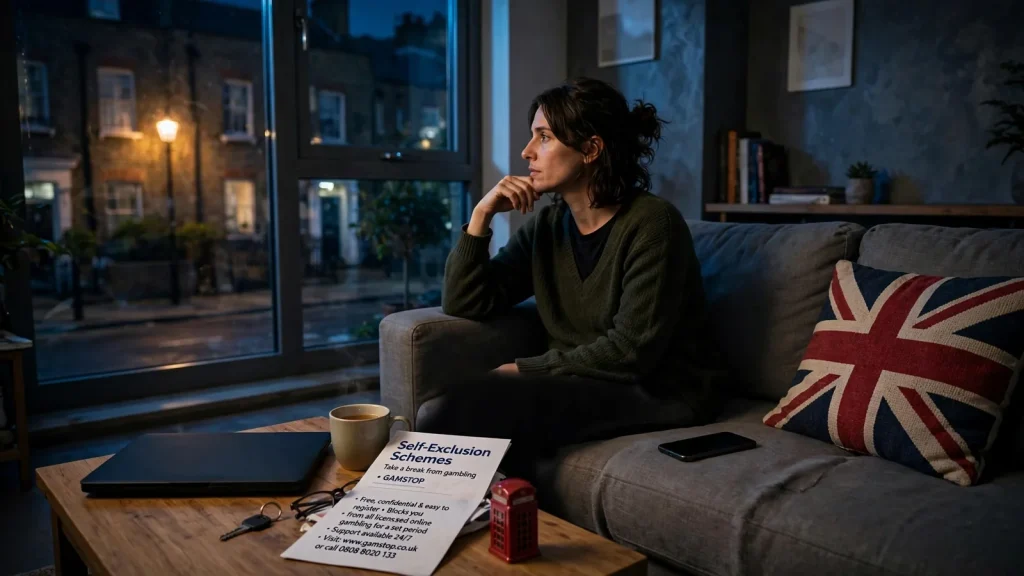
Gamban is a separate blocking tool, while GAMSTOP covers participating licensed gambling websites and apps in Great Britain.
Table of Contents
- What “Not on Gamban” Means for UK Casino Players
- Non-GAMSTOP Casinos and the Risk of Bypassing an Exclusion
- Where GAMSTOP Applies—and What Its Coverage Does Not Tell You
- Thinking of Gambling Without GAMSTOP? Pause Before You Act
- What “GAMSTOP-Free” Can and Cannot Mean
- A Safer Way to Judge “Best” Non-GAMSTOP Casino Claims
- Non-GAMSTOP Slots: The Exclusion Question Comes First
- Casinos Outside GAMSTOP: Check the Scope, Not the Sales Pitch
- What Happens After You Exclude Yourself from a Casino
- No GAMSTOP Slots? Use Exclusion Tools Before You Play
- Casino Guides
What “Not on Gamban” Means for UK Casino Players
“Not on Gamban” sounds like a clear label: a casino, app or group of slots either is or is not covered by Gamban software. But that phrase alone does not tell you what access a particular service blocks. Gamban is a separate blocking tool; it is not the same thing as GAMSTOP, the UK’s online self-exclusion scheme. Treating the two names as interchangeable can leave you with the wrong idea about what protection is in place.
The distinction matters because the available information about UK-wide online self-exclusion concerns GAMSTOP. It is the national online self-exclusion scheme for Great Britain and works across participating licensed gambling websites and apps. A description of a casino as “not on Gamban” does not, by itself, tell you whether it is covered by GAMSTOP, whether it holds a UK licence, or whether a device-blocking tool will prevent access to it.
I used to skim labels like these and assume they meant more than they did. “Not on” looked like a straightforward technical fact. In reality, the phrase can blur together two different questions: whether software blocks a site on your device, and whether a gambling operator is part of a multi-operator self-exclusion scheme. Those are not interchangeable checks.
If you’re looking at casinos not connected to GamBan in the UK in 2026, check each operator’s details carefully before deciding whether it suits you. The available information here is limited to the stated payout speed.
1. EvoSpin
Payout speed: 1-3 business days EvoSpin has a stated payout speed of 1–3 business days. You can use that as a timeframe to consider when reviewing its payment details.
2. Revery Play
Payout speed: 1-3 business days Revery Play has a stated payout speed of 1–3 business days. You can check its payment details to understand how that timeframe applies.
3. x3bet
Payout speed: 1-3 business days x3bet has a stated payout speed of 1–3 business days. You can take this timeframe into account when considering its payment arrangements.
4. Dieselwin
Payout speed: 1-3 business days Dieselwin has a stated payout speed of 1–3 business days. You can review its payment details for further information about withdrawals.
5. NightLuck
Payout speed: 1-3 business days NightLuck has a stated payout speed of 1–3 business days. You can use this as a reference when checking its payment information.
6. Britsino
Payout speed: 1-3 business days Britsino has a stated payout speed of 1–3 business days. You can check its payment details to see what conditions apply.
7. BeOnBet
Payout speed: 1-3 business days BeOnBet has a stated payout speed of 1–3 business days. You can consider this timeframe while reviewing its withdrawal information.
8. Amunbet
Payout speed: 1-3 business days Amunbet has a stated payout speed of 1–3 business days. You can consult its payment details for any additional withdrawal information.
9. NightWin
Payout speed: 1-3 business days NightWin has a stated payout speed of 1–3 business days. You can use this stated timeframe as one point of reference.
10. SlotoSport
Payout speed: 1-3 business days SlotoSport has a stated payout speed of 1–3 business days. You can check its payment details for further information about withdrawals.
Gamban and GAMSTOP are not the same label
GAMSTOP is designed to apply across participating licensed online gambling websites and apps, rather than being a setting for one casino account. The Gambling Commission made participation in GAMSTOP compulsory for online operators from 31 March 2020. That is a rule about online operators’ participation in the scheme; it does not make “Gamban-free” a reliable description of an operator’s GAMSTOP status.
So when you see claims about online casinos or casino apps not being on Gamban, read the wording narrowly. It may be referring to device-blocking software, not to the operator’s position under UK self-exclusion arrangements. A site’s promotional description cannot settle that distinction. Nor does a list of slots labelled as not blocked establish which gambling websites are covered by a scheme.
The names are easy to mix up, especially when a page uses them loosely. I have done that myself. The useful question is not simply whether a casino is “on” a software product; it is what the statement actually tells you about access, licensing and self-exclusion. A slogan is not a safeguard.
What UK licensing tells you
There is a separate UK context to keep in view. Remote gambling operators selling into the British market must hold a Gambling Commission licence, wherever the operator is based. Online gambling is legal in Great Britain through licensed and regulated sites. That licensing framework and GAMSTOP are related to the UK market, but they are not the same thing: a licence is not a device-blocking tool, and the phrase “not on Gamban” does not explain an operator’s licence status.
Non-UK regulated casinos: UK rules and risks
This is why “best” claims built around the wording can be misleading. A polished page might group casinos, apps or slots under one heading, but that wording does not tell you whether the operator is licensed for the British market or how GAMSTOP applies. I would not treat “not on Gamban” as a quality mark, a safety rating or confirmation that a site is outside a self-exclusion arrangement.
If you are checking a real-money casino, look at the actual operator and its regulatory position rather than relying on a broad label. For UK players, the key licensing point is that an operator serving the British market needs the relevant Gambling Commission licence. That does not turn a Gamban claim into proof of anything else, and it does not replace the purpose of self-exclusion.
There is no useful shortcut in the wording. A casino can be described as “not on Gamban” without that phrase answering whether it is licensed, how a blocking tool behaves on your device, or whether GAMSTOP applies. Keep those questions separate. It makes the sales language easier to read—and harder to mistake for a guarantee.
Casino Guides for UK Online Gambling Topics
Non-GAMSTOP Casinos and the Risk of Bypassing an Exclusion
When you have excluded yourself from gambling, looking for a casino that seems to sit outside the block can feel like a small technical detour. It isn’t. The point of self-exclusion is to put distance between you and gambling when you have decided you need that distance. Trying to find a way around it can undo the protection you put in place.
I understand the temptation to treat the wording as a loophole. “Not on Gamban” can sound like a simple statement about software, while “not on GAMSTOP” refers to a different question. But either phrase can become a search for somewhere to gamble despite an existing exclusion. That is the part worth taking seriously—not whether a site’s marketing makes it sound separate.
If you have registered with GAMSTOP, you have chosen to ban yourself from gambling with UK-licensed online casinos. If you excluded yourself directly with a particular gambling business, that agreement applies to that business. In either case, self-exclusion is a formal agreement not to gamble, and you are responsible for sticking to it. Looking for another account or another casino does not make the original decision disappear.
That is why opening an account elsewhere is not a safe workaround. It may put you back in front of the very activity you were trying to stop, and playing at a non-GAMSTOP casino could breach the terms of your self-exclusion. A site presenting itself as separate is not permission to ignore an exclusion you have made. Nor does the label tell you whether gambling there fits the agreement you entered into.
Non-GamStop Curacao Casino Sites: UK Licensing
The practical risk is bigger than a technical breach. You can end up spending time checking claims, creating accounts and looking for ways to deposit when the reason you excluded yourself was to interrupt that pattern. I have learned not to trust the thought that “just this once” is a plan. It is usually the impulse trying to sound organised.
A casino’s refusal to serve a self-excluded customer is meant to create a barrier, not an invitation to find a softer one. Self-excluded customers should be refused service by the venues and websites from which they excluded themselves. Gambling businesses must offer self-exclusion by law. Those protections matter, but they cannot make the decision for you if you set out to gamble somewhere else.
If you are searching for a non-GAMSTOP casino because an exclusion is active, pause before registering or depositing. Don’t open another account to get around it. Instead, make the boundary wider: exclude yourself from every place where you might be tempted to gamble, rather than focusing only on the site or scheme that first came to mind. For online gambling, that may mean considering both a multi-operator exclusion and an exclusion with an individual business; for land-based gambling, consider the venues where you might be tempted too.
This is not about blaming yourself for wanting to play. Urges can feel convincing, especially when a site presents a fresh account as an easy answer. But an account you can open is not proof that gambling is safe for you, and an advert’s claim is not a reason to set aside your own exclusion. The safer move is to step away from the registration page and contact someone you trust or a gambling support service instead.
Bypassing Exclusion
Opening a new account at a non-GAMSTOP casino to get around an existing exclusion is not a safe workaround and may breach your self-exclusion terms.
It also helps to remember what an exclusion can and cannot do. It is a commitment you make to stop gambling with the places covered by it; it is not a way to recover money already spent, and it does not remove your responsibility to honour the agreement. The Gambling Commission cannot provide refunds for money lost through gambling. If you are looking for a route back to play because you regret losses or feel pressure to win them back, that is a reason to pause—not a reason to take a bigger risk.
I would be wary of any promise that frames an exclusion as something you can neatly sidestep. The language may be dressed up as choice or freedom, but the underlying decision is still yours: whether to respect a boundary you set while thinking more clearly. A new casino account can make that boundary easier to cross, not safer to cross.
For now, don’t create another account. Keep the exclusion in place, and extend it to other places where you may be tempted. That is the harder choice in the moment. It is also the one that protects the decision you already made.
Where GAMSTOP Applies—and What Its Coverage Does Not Tell You
GAMSTOP is the national online self-exclusion scheme for Great Britain. It works across participating licensed gambling websites and apps, so the point is to make one self-exclusion apply across multiple online operators rather than requiring a separate request to each one.
That scope matters when you see claims about casinos not blocked by Gamban or not affected by it. GAMSTOP and Gamban are different names, and GAMSTOP’s coverage describes the scheme itself. It does not tell you whether Gamban software blocks a particular website or app. I would not treat one as proof of the other. Different question.
Non-GamStop European Casinos: What the Label Means
For GAMSTOP, the relevant setting is licensed online gambling. Its multi-operator reach is across participating licensed websites and apps; it is not a description of every place where someone might gamble. Nor does the phrase “not on GAMSTOP” tell you, by itself, what other protections apply at a gambling business. A label is not a safety check.
The same distinction is easy to miss with land-based gambling. A scheme aimed at online websites and apps is not the route for excluding yourself from every physical casino. If you want to self-exclude from all land-based casinos in the UK, SENSE provides that route: sense.org.uk. An online exclusion and a land-based exclusion address different settings. If you are tempted in both, consider both rather than assuming one covers the other.
I’ve learned to be wary of neat claims that turn a complicated boundary into a simple promise. “Not blocked” sounds definite, but it can leave out what is being blocked, by which tool, and where. A statement about GAMSTOP participation cannot settle a question about Gamban software. And a statement about a device-blocking product would not, on its own, describe the reach of a multi-operator self-exclusion scheme.
So when checking what an exclusion covers, start with the route you actually used. If you registered with GAMSTOP, you are dealing with its online scheme across participating licensed gambling websites and apps. If you asked a particular land-based casino to exclude you, that is a different arrangement. The names may appear together in casino advertising, but they do not make the schemes interchangeable.
GAMSTOP
A national online self-exclusion scheme for Great Britain covering participating licensed gambling websites and apps.
Gamban
A separate device-blocking software tool used to prevent access to gambling sites on a device.
SENSE
The route for excluding yourself from all land-based casinos in the UK.
This is also why a casino’s claim about being “outside” a scheme should not be read as a clean bill of health. It describes a claimed relationship to that scheme, not whether gambling there is suitable for someone who has chosen to self-exclude. I wouldn’t use a coverage label as permission to keep playing. That’s the trap.
If your concern is whether a specific site or app is blocked by Gamban, check the product’s own information rather than trying to infer it from GAMSTOP. Keep the question narrow: GAMSTOP tells you about its multi-operator online self-exclusion scope; land-based casino exclusion has a separate route through SENSE. Knowing that boundary is useful. It is not a reason to test it by gambling.
Thinking of Gambling Without GAMSTOP? Pause Before You Act
If you have excluded yourself and are now looking for a casino that seems easier to access, take a moment before acting. I understand the pull: when the urge is loud, a search for a way around the block can feel like a practical fix. It isn’t a safe one.
Self-exclusion is a formal agreement not to gamble for the period you chose. Gambling businesses are required to offer this option, and a business must take reasonable steps to stop someone who has excluded themselves from gambling there. If you excluded yourself from a particular venue or website, you should be refused service by that venue or website. That is the point of the agreement, not a technical obstacle to beat.
The difficult part is that a phrase such as “casino without Gamban” does not tell you whether gambling would be compatible with your own exclusion. Gamban is not the same thing as a self-exclusion agreement with a gambling business. Nor does a site’s marketing tell you what you agreed to, or what restrictions apply to you. Don’t treat an apparent gap in a blocking tool as permission.
I’ve learned that a workaround can make a bad moment last longer. Opening another account elsewhere to get past an exclusion is not a safe solution. If you are excluded from a specific business, trying to gamble there anyway conflicts with the reason you set the boundary. Playing at a non-GAMSTOP casino could also breach your self-exclusion terms. Stop before depositing or placing a bet, rather than relying on a site’s sales language to settle that question.
If you feel at risk of gambling, make the boundary broader, not narrower: exclude yourself from every place where you may be tempted to play. That may mean dealing with more than one business. It can feel like a hassle. Better a hassle than an impulsive account.
And if you have already lost money, don’t assume a complaint to the regulator will return it. The Gambling Commission cannot provide refunds for money spent gambling. A complaint may be relevant to how a business acted, but it is not a way to recover gambling losses.
I’m not saying this as someone who has always made the sensible choice. I know how convincing “just this once” sounds when you want to get back in. Give yourself space to step away from the screen and contact someone you trust. A pause is not a failure. It is a chance to keep the decision you made while you were thinking clearly.
What “GAMSTOP-Free” Can and Cannot Mean
“GAMSTOP-free” can sound like a clear description of a casino. It isn’t. GAMSTOP is a free self-exclusion service: registering prevents access to existing gambling accounts and the creation of new ones with online gambling operators across the UK. The phrase does not, by itself, tell you whether a particular website is covered, what licence it holds, or whether a device-blocking product such as Gamban affects access to it.
That distinction matters. GAMSTOP is an account-based, multi-operator scheme; Gamban is a separate product. I wouldn’t treat claims about one as evidence about the other. A site calling itself “Gamban-free” is making a claim about access, not proving that it is outside GAMSTOP or suitable for someone who has self-excluded. The label is not a safety check.
For the UK online market, the key date is 31 March 2020. From then, the Gambling Commission required online operators to participate in GAMSTOP. Regulated online casinos have therefore been required to block people who are self-excluded through the scheme. A promotional description cannot cancel that obligation.
Gambling businesses must also offer customers a way to self-exclude. So “GAMSTOP-free” should not be read as “self-exclusion does not apply here”. If you have an active GAMSTOP exclusion, trying to gamble through a site that advertises itself as beyond a blocking tool could conflict with the purpose or terms of your exclusion. Don’t open another account elsewhere to get around it. That is not a safe workaround.
I used to read labels like this as if they settled the important question. They don’t. “Free” may simply refer to the fact that GAMSTOP costs the person registering nothing; it does not mean a casino is free to use, safer, or outside UK rules. Nor does a claim about Gamban tell you whether an operator participates in GAMSTOP.
If gambling is tempting you, treat the exclusion as applying to you, not as a technical puzzle to solve. Exclude yourself from every place where you might be drawn into gambling, rather than relying on a label to create a gap. GAMSTOP addresses online gambling operators; it does not establish that every other route is blocked. Keep that in mind before acting on any casino’s wording.
The useful question is not whether a site markets itself as “free” of a particular tool. It is whether you have an active exclusion and whether gambling would go against it. Labels are not permission.
A Safer Way to Judge “Best” Non-GAMSTOP Casino Claims
A “best” label sounds like a verdict. It is often just a sales pitch with the hard question left unanswered: would gambling there conflict with an exclusion you have already made? A polished comparison cannot answer that for you, and a ranking is no reason to treat an exclusion as irrelevant.
Do
- Respect the boundaries you set while thinking clearly
- Use official exclusion routes like GAMSTOP or SENSE
- Contact support services if you struggle to stay excluded
Don’t
- Treat “non-GAMSTOP” labels as a quality or safety mark
- Open new accounts to sidestep a self-exclusion agreement
- Rely on a ranking to decide if gambling is safe for you
I have learned to be wary of claims that make a site sound like a clever exception. “Non-GAMSTOP” or “non-Gamban” can be presented as a feature, as if access were the only thing worth judging. But those terms do not tell you whether playing would break your own self-exclusion agreement. They do not establish that an operator will accept you, either.
Self-exclusion is a formal agreement not to gamble. The responsibility to stick to it rests with the player, even when a website’s advertising encourages you to think of the restriction as a technical obstacle. If you have excluded yourself, do not open an account elsewhere to get around it. Pause before depositing. A different brand name does not change the commitment you made.
There is also a responsibility on the business. UK gambling businesses must offer self-exclusion, and they must take reasonable steps to prevent a customer who has excluded themselves from gambling. Customers should be refused service by the venues and websites from which they excluded themselves. That duty matters more than a review’s “top pick” badge.
So what can a best-of article actually establish? It may describe the writer’s preferences or the information they chose to compare. It cannot decide whether you are safe to gamble, cancel your exclusion, or make a conflicting account harmless. A confident star rating does not override a formal agreement. That is the point I would check first.
If you are already self-excluded, treat a recommendation aimed at finding somewhere else to play as a warning sign, not a solution. Close the page and give yourself room to reconsider the urge. I know how easy it is to focus on the next available option and ignore what prompted the exclusion in the first place. That tunnel vision is costly.
If you have spent money gambling and are hoping a regulator can return it, do not rely on that as a remedy: the regulator cannot provide refunds for gambling losses. The sensible decision is not to use a “best” list to test the boundary. Keep your exclusion in place and seek support if you are struggling to do so. No ranking changes the agreement.
Non-GAMSTOP Slots: The Exclusion Question Comes First
A label such as “non-GAMSTOP slots” or “non-Gamban casino sites” can make it sound as though the important question is where a game is available. If you have already asked a gambling business to exclude you, availability is not the point. The first thing to consider is whether playing would go against the agreement you made.
You can ask an individual gambling business to exclude you. Self-exclusion is a formal agreement not to gamble with that business, and you are responsible for sticking to it. So if you excluded yourself from a particular casino, don’t treat a slot being visible or an account still being accessible as a reason to play. It does not cancel the agreement.
I’ve learned not to give advertising labels much weight. “Free”, “outside” or “not on” can sound like a clean answer, but those words do not tell you whether you have excluded yourself from the business in question. Nor does the word “slots” change the issue: a game is still gambling, and the relevant question is whether you agreed not to gamble with that operator.
Self-exclusion is a formal agreement not to gamble; if you have excluded yourself from a business, you are responsible for sticking to that agreement regardless of game availability.
There is a responsibility on the business, too. Gambling businesses must take reasonable steps to prevent a customer who has self-excluded from gambling with them. That duty matters, but it is not a reason to test whether a site will let you through. The agreement remains something you have made, and you should not gamble there.
If you are uncertain about the terms of an exclusion you set up, contact the business rather than trying to work around it. Ask what your agreement covers and make your decision based on the answer. A page promoting “non-GAMSTOP slots” cannot tell you what you personally agreed to, and a marketing claim should not outweigh that agreement.
The practical line is simple: if you excluded yourself from that gambling business, don’t play its slots. Don’t open another account there, either. If the urge to gamble is pushing you to search for a route around an exclusion, pause before acting and keep away from gambling rather than treating a different label as permission.
That’s the part I’d check first. Not the reels, not the headline, not the promise that a site is somehow separate. The exclusion.
Casinos Outside GAMSTOP: Check the Scope, Not the Sales Pitch
“Outside GAMSTOP” can sound like a clear status, but it does not explain what kind of exclusion is involved. GAMSTOP is a multi-operator scheme: it blocks access across participating licensed online gambling websites and apps. A separate self-exclusion request applies to one gambling business. Those are different scopes, not interchangeable labels.
That distinction matters if you have excluded yourself from a particular casino. A scheme-wide search for access does not cancel a direct agreement with that business. Nor does a claim that a site is “outside” a scheme tell you whether you personally have an active exclusion there. The relevant question is where you asked to be excluded.
I used to treat wording like “not covered” as if it settled the practical question. It doesn’t. A statement about a scheme’s reach says nothing by itself about an individual account or agreement. Keep the two things separate: GAMSTOP is multi-operator; a request made to one gambling business concerns that business.
UK gambling businesses must offer self-exclusion, and UK-licensed online casinos must provide responsible gambling tools that include it. If you ask one business to exclude you, that is a separate route from registering with a multi-operator scheme. You can request exclusion from a single gambling business without treating it as a substitute for broader protection.
“GAMSTOP-free” is a sales phrase, not a reliable description of your own status. It cannot tell you whether you have excluded yourself directly from a business, or whether an existing agreement still applies. If gambling is becoming difficult to control, do not use a claim about coverage as a reason to test the boundary or open another account elsewhere. That can work against the purpose of your exclusion.
Check the scope of the agreement you actually made, and exclude yourself from every place where you may be tempted to gamble. If you are unsure what a direct agreement covers, contact that gambling business rather than relying on promotional wording. Labels are easy. The scope is what counts.
What Happens After You Exclude Yourself from a Casino
Once you make a self-exclusion agreement with an individual casino, the operator has responsibilities; it is not just a note on your account. The account should be closed, any money still held in it returned to you, and your details taken off the operator’s marketing lists. The business must also take reasonable measures to stop you gambling with it while the exclusion applies.
Non-UK Licence Casinos: What the Licence Means
That last part matters. An exclusion is supposed to prevent access, not merely stop promotional emails. If you receive marketing after excluding yourself, or find that the account remains available for gambling, keep a record of what happened and raise it with the operator. I used to treat account settings as if they were the whole deal. They aren’t.
This applies to an agreement with that gambling business. It does not tell you whether a particular casino is covered by Gamban, nor does the phrase “not part of Gamban” establish what happens to an account after you exclude yourself from an operator. Software coverage and an operator’s duties under a self-exclusion agreement are different questions. Don’t read a marketing label as permission to gamble.
Also, the return of account funds is not a refund for money already spent gambling. It means money remaining in the account after exclusion. The regulator cannot provide refunds for gambling losses.
If the casino does not appear to follow through, contact its customer services and explain that you have self-excluded. UK-licensed gambling businesses must provide a complaints process and access to an approved alternative dispute resolution service if you need to escalate an unresolved complaint. Keep your messages and any confirmation of the exclusion so you can describe the issue clearly.
And if you excluded yourself because gambling was becoming hard to control, don’t open another account elsewhere to get around that decision. A different site does not undo the reason you chose to stop. The exclusion still matters.
No GAMSTOP Slots? Use Exclusion Tools Before You Play
Looking for slots that are not blocked by Gamban is not a reliable way to decide whether gambling is safe or permitted for you. Gamban is a blocking tool; self-exclusion is a separate route. Neither a slot’s name nor its availability tells you whether you have an active exclusion. I would not treat a way around a block as a green light.
If you want to stop gambling online across participating UK operators, you can register with GAMSTOP. For a single website or app, go to its Responsible Gambling or Safer Gambling page and follow the self-exclusion instructions. If you cannot find them, contact customer services. Gambling businesses must provide self-exclusion, and a business must take reasonable steps to prevent an excluded customer from gambling with it.
For a land-based casino, ask for self-exclusion at its customer service desk. Choose the routes that cover every place where you might be tempted to gamble; excluding yourself from one website does not, by itself, exclude you from other businesses or venues.
Keep it simple. If you have already excluded yourself, do not open another account elsewhere to get to slots. Playing at a non-GAMSTOP casino could breach the terms of your self-exclusion, and another site is not a safe workaround. A game being accessible does not mean you should play it.
I have made the mistake of treating access as permission. It isn’t. If you are trying to gamble despite wanting a block, pause and use the exclusion route that matches where you gamble: GAMSTOP for online operators, the individual casino for one site or app, or the venue’s customer service desk for a land-based casino.
Self-exclusion is a practical barrier, not a way to recover money already spent. The Gambling Commission cannot refund gambling losses. If you need to stop, act before opening a game.
How does self-exclusion work?
You register with GAMSTOP for online gambling across UK-licensed operators, or contact an individual gambling business to exclude yourself there. You provide information to confirm your identity, choose a period and receive confirmation; for a land-based casino, ask a staff member to help you self-exclude.
How do I return from self-exclusion?
For GAMSTOP, you must contact the scheme directly to request removal. A 24-hour cooling-off period applies, and after removal it can take operators a further 24 to 48 hours to update your status.
How does GAMSTOP benefit me?
GAMSTOP blocks you from accessing existing accounts or creating new ones with UK-licensed online gambling operators, helping you keep distance from online gambling. It is free to use.
How long does it take for GAMSTOP to become active after sign-up?
After your identity is verified, GAMSTOP starts a 24-hour cooling-off period, and your exclusion remains active during it.
Casino Guides

Anjouan Casino Licence for UK Players: What It Means
Anjouan authorisation is separate from UKGC approval, with practical implications for casino access, bonus terms,...

Casino app UK guide: browser and app play
A practical look at browser access, installed apps, mobile slots and the checks that matter...

Fast Payouts at UK Online Casinos: Keno Explained
Keno results depend on random draws and game-specific paytables, while withdrawal speed is a separate...

UK Casino First-Deposit Bonuses: What to Check
Deposit matches, caps, free spins, wagering rules and eligibility all affect how a welcome offer...
Foreign Casinos for UK Players: Rules and Risks
In the UK, “foreign casino” refers to an operator’s UKGC licensing status, not simply where...

Best International Casinos for UK Players: What to Know
An overseas base does not determine whether a casino is licensed to serve Britain; that...

Keno Online Casinos in the UK: How to Compare Them
Keno outcomes depend on random draws and spot matches, while game rules and casino terms...

Live Casino UK: How Live Tables Work
A practical guide to streamed table play, from the role of the software to the...

Mobile Casinos That Accept Phone Credit in the UK
Phone-credit deposits are collected through a mobile account, added to a bill or taken from...

Offshore casino sites for UK players: what to know
An offshore licence may apply overseas, but it does not establish that a casino is...

Offshore Casinos for UK Players: What to Check
The guide separates a working sign-up page from UK authorisation and explains how to assess...
Online Slot Payout Percentage: Understanding RTP
RTP describes a game's designed return over defined play, while volatility measures a different aspect...

British Casinos Not on GamStop: What UK Players Should Know
A casino’s British branding does not establish whether it falls under GamStop; the operator’s UKGC...

Casino No ID Verification in the UK: What It Means
A clear look at licensing, deposits, bonuses and why identity checks may still apply before...

Casino sites not registered with GamStop: UK guide
Sites outside GamStop are not covered by the same UKGC participation requirement, so their safeguards...

Casino Without a Swedish Licence: UK Regulation Guide
A foreign licence does not make a casino UKGC-regulated, a distinction that can affect oversight,...

Casinos That Bypass GamStop: Rules and Risks
GamStop restricts access at participating UKGC-licensed operators, while sites outside that coverage raise separate licensing...

Curacao Casino Licence in the UK: What It Means
A Curacao label signals a licensing jurisdiction, not a shared regulatory system or a guarantee...

Fastest Payout Online Casino UK: Keno Explained
Keno rules show what a winning ticket is worth, while casino payment terms govern how...

Gibraltar Casino Licence UK: What Players Should Check
A licence badge alone does not establish the support, safer-gambling controls or account protections available...

Jackpot Mobile Casinos in the UK: How to Compare
A practical guide to jackpot types, mobile play, payment limits and the checks that matter...

Merkur Casino Online UK: Slots, Demos and Checks
A practical look at game rules, slot features, demo limits, site checks and the terms...

Trustworthy Online Casinos in the UK: Checks Before You
A practical way to assess casino licensing, gambling rules, bonus conditions and what to verify...

No Account Casino UK: What the Label Really Means
The label may mean fewer visible steps at the start, but it does not explain...

No ID Verification Withdrawal Casinos in the UK
UK rules require age and identity checks before gambling, and a withdrawal may still involve...

Non-GamStop Curacao Casino Sites: UK Licensing
A Curacao label does not establish UK authorisation, and payment options or GamStop status do...

Non-GamStop European Casinos: What the Label Means
A European label alone cannot establish whether a casino participates in Great Britain's national online...

Non-UK Licence Casinos: What the Licence Means
A licence applies under the rules of its issuing jurisdiction and does not establish that...

Non-UK-Registered Casinos: What the Label Means
The key distinction is whether the casino answers to the UK Gambling Commission, not where...

Non-UK regulated casinos: UK rules and risks
A guide to UKGC licensing, overseas casino oversight, GamStop limits and the checks available when...

Non-UKGC Licensed Casinos: What UK Players Should Know
A guide to overseas licensing, player protections, payment terms and the limits of relying on...

MGA-Licensed Online Casinos in the UK: What to Know
An MGA licence covers Malta’s framework; it does not establish that an operator may serve...

Online casino with no registration in the UK: explained
Browser-based play can open quickly, but access to a game does not mean you are...

Online Casinos With No Sister Sites: UK Guide
Sister-site status can reflect common ownership or technology, but a familiar design alone does not...

Online slots not on GamStop: what the term means
GamStop applies to participating UKGC-licensed businesses, not individual games, so a slot title cannot show...

Safe Online Casinos in the UK: How to Check Trust
A practical look at licensing, account checks, payment risks and the rules that matter to...

Online Casino Payouts in the UK: How RTP Works
RTP describes expected returns over extensive play, while game odds and withdrawal terms shape what...

Trusted Casinos Not on GamStop in the UK: What to Check
A practical look at licensing, payment and bonus checks, and the protections that may not...

Trusted UK Casinos: What Licensing Really Shows
A practical way to assess operators, account checks, bonuses, payment options and the terms behind...

UK Gambling Casino Sites and Slots: What to Check
A clear-eyed guide to checking slot information, bonus terms, costs and safeguards before deciding whether...

USA Casinos for UK Players: Licensing and Risks
A site accepting British traffic is not necessarily licensed for the market, so weigh its...

VPN-Friendly Casinos in the UK: What to Check
A VPN can route your connection, but it does not establish a casino’s trustworthiness or...






























































































































































































































































